Cute Puppy and Kitten Sewing Tools
A Design That Smiles Back — Before You Even Stitch It
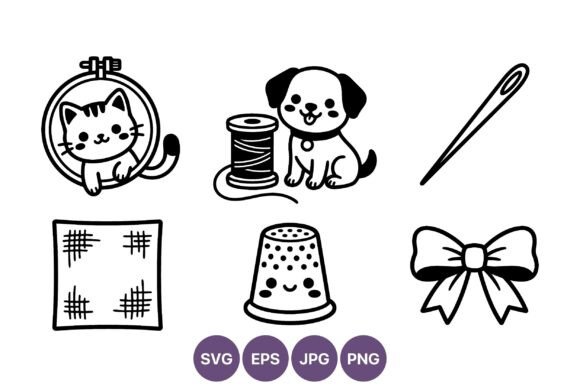
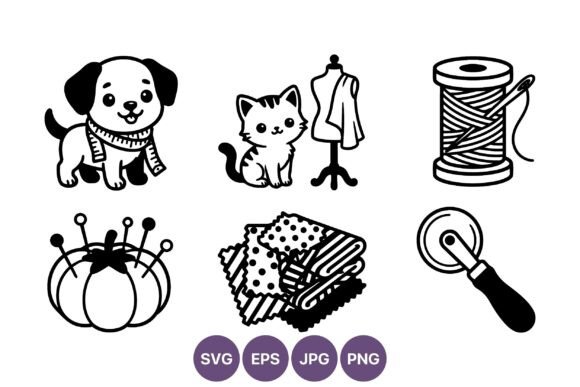
First impression? Cute Puppy and Kitten Sewing Tools feels like a warm, handwritten note slipped into a fabric scrap bag — friendly, intentional, and quietly confident. The black-and-white vector art balances charm with clarity: a happy puppy in a scarf, a serene kitten beside a draped dress form, and thoughtfully placed tools — spool with needle, pincushion, folded fabric. No clutter, no visual noise. Just clean outlines, gentle curves, and balanced negative space. It doesn’t shout “cute” — it *invites* it. That’s rare in embroidery-ready illustrations, especially ones meant for real-world stitching.
Where This Design Naturally Lands (and Why)
I recently sketched out a custom embroidered tote for a local indie yarn shop — think organic cotton canvas, minimalist branding, and a subtle nod to makership. Cute Puppy and Kitten Sewing Tools fit instantly. Not as a bold chest logo, but as a soft-cornered side panel motif: 3.5" wide, centered just above the seam. It read clearly at that scale, held warmth without saccharine overload, and reinforced their brand voice — thoughtful, handmade, quietly joyful.
It’s equally at home on baby onesies (paired with soft pastel thread), tea towels for craft fairs, or pillow covers for nursery decor. As an embroidered patch? Strong candidate — the shapes hold integrity when cut and fused. On sweatshirts? Yes — especially mid-weight fleece where stitch definition stays crisp. And for Etsy sellers listing digital embroidery files? This is exactly the kind of Illustrations asset buyers search for: themed, versatile, and commercially intuitive.
What Holds Up — and What Needs a Second Look
The design’s strength lies in its restraint. The puppy’s scarf, kitten’s ear contour, and curve of the dress form are all generous in line weight — no hair-thin details that vanish under satin stitch or blur on textured fabric. That means fewer re-hoops, less thread breakage, and cleaner results on cotton twill, linen blends, and even medium-weight denim.
But — and this matters — avoid pushing it too small. Below 2.75", the pincushion’s stitching lines and the needle’s fine tip risk merging. On stretchy fabric like jersey or thin knits, use cutaway stabilizer *under* and *on top* to prevent puckering around the dress form’s drape. Dark fabrics? Test contrast early: black thread on navy reads beautifully, but white thread on charcoal needs a dense fill stitch base or a light underlay to avoid shadowing.
Curved surfaces — like caps or curved apron pockets — require careful placement. The horizontal flow of the composition works best on flat or gently rounded areas. Don’t force it over a crown seam; instead, rotate and anchor it along a side panel where the stitch path stays stable.
Stitching Clarity = Customer Trust
When your buyer sees a finished product featuring Cute Puppy and Kitten Sewing Tools, they’re not just seeing a design — they’re reading your craftsmanship. Clean outlines translate to confident machine control. Balanced stitch density (no overly dense fills that stiffen fabric, no sparse running stitches that look unfinished) tells them this wasn’t rushed. That directly impacts perceived value — especially for personalized gifts or boutique merchandise. A well-executed version says, “This was made with care,” not “This was dropped into a template.”
Real-World Designer Notes — Not Theory
- Always test on scrap fabric first — especially if using it on baby items or apparel meant for frequent washing. Check how the fill stitch settles after laundering.
- Review thread color pairings in natural light — what reads sweet in studio lighting can look flat under kitchen fluorescents or outdoor sun.
- Confirm hoop size compatibility before digitizing or purchasing — while the vector is scalable, your machine’s max hoop limits what you can stitch in one pass.
- Inspect small details at actual stitch size: zoom in on your embroidery software to verify the needle’s point and scarf fringe won’t collapse into a blob.
- Test black-and-white mockups — this design shines in monochrome, so see how it holds up without color crutches.
- Compare light vs. dark fabric backgrounds — the contrast shift changes mood: playful on cream, cozy on charcoal.
- Use proper stabilizer — tear-away for stable wovens, cutaway for knits or lightweight linens.
- Verify licensing terms — since this is a Graphics asset, confirm whether commercial use (e.g., selling finished embroidered totes or digital files) is permitted before launching your Etsy listing or craft fair batch.
Beyond the Stitch — Brand, Gift, and Business Fit
This isn’t just a machine embroidery design — it’s a quiet brand amplifier. For craft businesses building a recognizable aesthetic, Cute Puppy and Kitten Sewing Tools adds cohesion across product lines: same motif on a patch, a tea towel, and a holiday gift tag. Customers begin to associate that gentle, maker-spirited vibe with your shop.
As a personalized gift? It lands perfectly for new sewists, knitting circles, or baby showers — symbolic without being literal, charming without being childish. And for digital product sellers? It’s a strong anchor for themed bundles: “Sewing Studio Collection” or “Maker Life Graphics.” Pair it with coordinating tools-only or pet-only variants, and you’ve got scalable design assets.
Just remember: its personality is approachable, not flashy. It won’t dominate a loud streetwear sweatshirt — but it’ll elevate a handmade apron, a linen pouch, or a keepsake blanket with sincerity.
Final Thought — Does It Feel Like Yours?
Good embroidery design doesn’t just stitch well — it feels like an extension of your hand. Cute Puppy and Kitten Sewing Tools does that. It’s got enough character to stand alone, enough simplicity to adapt, and enough warmth to make people pause and smile. Whether you’re stitching it for a client, prepping a craft fair booth, or building a digital shop, it earns its place — not because it’s trendy, but because it’s thoughtfully built for real making.