Cute Cat Life Vector Clipart: A Designer’s Real-World Embroidery Review
First Impressions: Charm Without Clutter
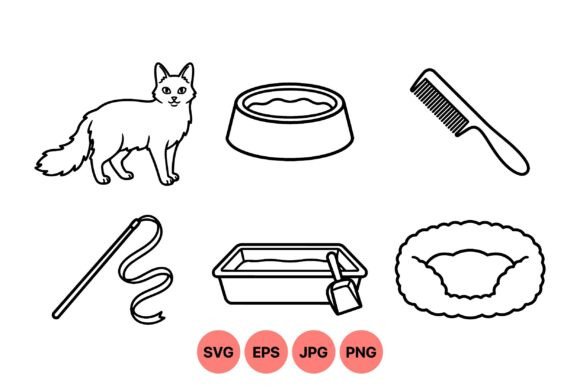
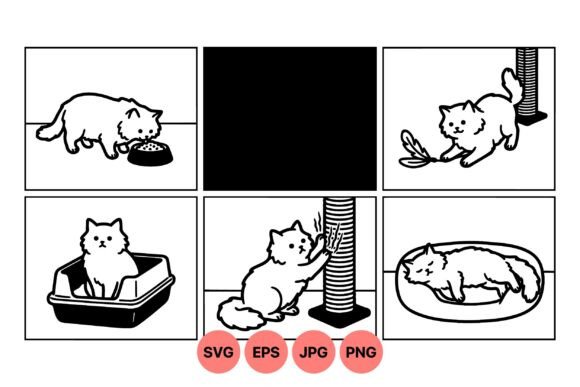
Opening the ZIP folder for Cute Cat Life Vector Clipart, I immediately felt that familiar designer sigh of relief — clean vectors, consistent line weight, and a cohesive theme. These aren’t random cat doodles; they’re five black-and-white vector panels telling a quiet, relatable story: eating, playing, scratching, using the litter box, and sleeping. The style is soft-edged but confident — fluffy without being fuzzy, expressive without exaggeration. It reads as warm, slightly nostalgic, and deeply handmade in spirit — exactly the tone I’d reach for when designing a custom embroidered tote bag for a local pet boutique or stitching a nursery pillow cover for a first-time parent.
Where This Design Truly Shines
Cute Cat Life Vector Clipart lands beautifully on products where personality matters more than precision. Think sweatshirt embroidery for a small craft fair booth — the sleeping cat panel stitched simply in matte black thread on heather grey fleece reads instantly and warmly. Or an embroidered patch sewn onto a denim apron for a cat café owner: the scratching post scene holds up at 3–4 inches wide with clear negative space around each element, making it forgiving for medium-density fill stitch and easy to hoop.
It’s also a natural fit for baby embroidery — especially on organic cotton onesies or swaddle blankets. The eating and sleeping panels translate well into gentle, low-stitch-count interpretations. No fine facial details to vanish in tiny satin stitch; just friendly silhouettes with breathing room. As an Etsy seller, I’d pair one panel with minimalist text (“My First Litter Box”) for a humorous-but-sweet holiday embroidery kit — the kind buyers love to gift and proudly display.
Real Embroidery Considerations: What Works (and What Needs Care)
This isn’t a high-detail machine embroidery design built for 12-needle commercial machines. It’s a vector illustration — elegant, scalable, and expressive — but it demands thoughtful translation into stitch. Here’s how it behaves across real surfaces:
- Tote bags & tea towels: Excellent. The bold shapes and open composition handle fabric texture and moderate stitch density without bleeding or crowding.
- Baby clothes & caps: Use the sleeping or eating panel only — avoid the feather toy or litter box scenes if hooping under 3.5". Curved surfaces like cap fronts need simplified outlines and generous stitch spacing.
- Dark fabric: Works best with high-contrast thread (e.g., bright white or cream on navy). Avoid light grey threads — they’ll mute the charm.
- Stretchy or thin fabrics: Stabilizer is non-negotiable. A lightweight cutaway plus tear-away combo keeps those smooth curves from distorting during satin stitch runs.
- Frequent-wash items (kitchen towels, baby bibs): Stick to running stitch outlines or low-density fill. Dense satin areas on the cat’s fur won’t hold up over time — simplicity here equals longevity.
What This Design Adds to Your Finished Product
It adds recognition — not just “a cat,” but a vibe customers connect with emotionally. That matters for handmade product value. When someone sees your embroidered pillow cover with the sleeping cat panel, they don’t just see stitching — they see intention, warmth, and shared understanding. That builds trust faster than any tagline.
It supports brand consistency for small shop owners. If you sell matching nursery decor and pet-themed gifts, Cute Cat Life Vector Clipart gives you a unified visual language — no need to mix styles across embroidery files, printable mockups, or digital product previews. And because it’s black-and-white vector, it adapts cleanly to both light and dark backgrounds in your listings, saving hours on mockup prep.
Practical Notes Every Embroidery Designer Should Keep Handy
Before stitching your first piece, do this:
- Test Cute Cat Life Vector Clipart on scrap fabric *with your exact stabilizer and thread*. See how the curves hold on your machine — some satin stitch engines struggle with tight arcs.
- Review stitch density in your digitizing software. If converting to embroidery file yourself, reduce fill density by 15–20% for soft fabrics.
- Check hoop size compatibility. The full five-panel layout won’t fit most standard hoops — plan for single-panel use unless you’re using a large-format frame.
- Inspect small details: feather strands, litter box edges, whiskers. If digitizing manually, simplify or remove elements under 1.5mm — they’ll vanish in thread.
- Run black-and-white mockups. Does the sleeping cat read clearly on charcoal? Does the eating cat pop on ecru linen? Don’t assume contrast — verify.
- Confirm licensing. Since this is listed as Graphics in the Illustrations category, review terms before selling finished embroidered patches or digital embroidery files derived from it.
A Final Thought for Craft Business Owners
Cute Cat Life Vector Clipart won’t win awards for technical complexity — and that’s its strength. In a market flooded with over-digitized, overly busy embroidery files, this set stands out by honoring restraint. It invites collaboration between designer and stitcher, not just execution. Whether you’re creating personalized gifts, small shop merchandise, or holiday embroidery kits, it gives you room to interpret, adapt, and infuse your own voice — while still delivering instant appeal. That balance — between clarity and character, simplicity and soul — is rare. And for makers who value both craftsmanship and connection, it’s worth every stitch.